


How to Learn Backstroke Swimming Technique?
backstroke swimmingis just one of the swimming styles. There are four types of swimming techniques. Butterfly style, freestyle, backstroke style and breaststroke swimming style are the most commonly used swimming techniques. By learning the backstroke swimming technique, significant improvement is achieved in diseases such as herniated disc, neck hernia, sciatica and arthritis, especially those related to the skeletal system.
Thanks to this muscle-strengthening technique, you can get rid of your pain in a short time and gain a healthier structure. People who have problems with weight get rid of their excess weight by swimming and have an extremely fit body. Swimming exercises your muscles and tightens them, allowing you to have a beautiful body. Swimmers who want to learn backstroke can easily learn this swimming technique.
How to learn backstroke swimming For swimmers wondering, it is possible to learn this style with a few easy techniques. The backstroke swimming technique, which can be learned much more easily compared to other swimming styles, appears to be the easiest and most comfortable swimming style.
When swimming on your back, the head is always above the water. In this way, breathing problems are experienced much less than in other styles. The head can only go under water while pulling the arm.
How to Breathe While Swimming Backstroke?
Backstroke swimming style Since it is one of the most breathable swimming techniques, swimmers lying on the water have the opportunity to breathe easily. It will be extremely useful for people to determine their own breathing technique in the backstroke swimming technique.
What are the arm tractions during backstroke swimming?
In the backstroke swimming technique, the arms act as a propellant in the water to move forward quickly. Therefore, it is important for swimmers to use their arms well. Swimmers who use their arms well have the opportunity to progress quickly in the water with the backstroke technique.
Backstroke Drills
Backstroke swimming techniqueWhen starting out, the first arm pull is assumed to be the right arm. When the right arm is removed from the water, the left arm should be brought to leg level. When the right arm enters the water, the left arm should come out of the water and backstroke swimming movements should be performed continuously. In order to stay on the surface of the water, our arm entering the water must be bent at a half angle from the elbow and act as a paddle. The arms act as oars, allowing us to propel ourselves and move quickly on the water surface.
Backstroke swimming drill We have listed a few drill examples that you can do in training as follows.
- Back foot kick with arms attached to the legs,
- Back foot kick with arms in streamline position,
- A right arm pull with six feet, arms attached to the legs,
- A left pull with six feet, arms attached to the legs,
- Arms attached to the leg, six feet right arm, six feet left arm pulling
- Arms attached to the legs, one and two arms pulling at the same time while standing six feet,
- Pull buoy only two arm pulls and advancement between the legs,
- Pull buoy is arm pulling by pulling the water between the legs without stopping.
- Water sensation, scalling, with pull buoy in supine position
- While swimming in a supine position, one arm behind, one arm attached to the leg, one arm change in six feet, backstroke coordinated drill,
- While swimming in a supine position, arm pulls in a row of six feet with arms in the air.
Similar to this different backstroke swimming drill These exercises will improve your technique even more.
8 Different Backstroke Swimming Arm Drill Videos
How Should Backstroke Swimming Start and Exit Be?
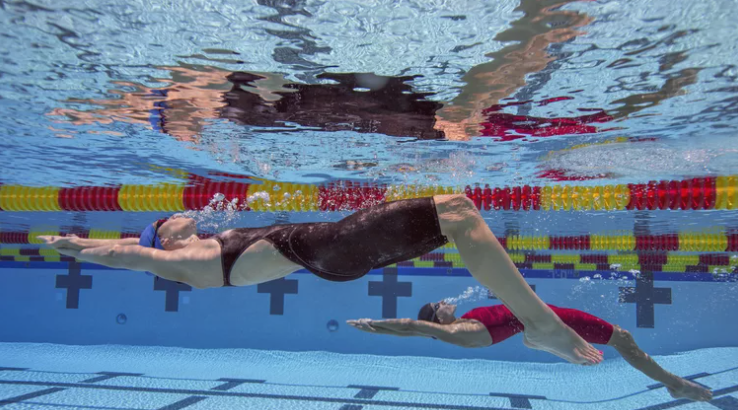
The swimmer faces the wall and holds part of the starting block or the wall with his hands. Usually, there are touch pads in the water and hand grips on the bars to prevent slipping. Legs are placed shoulder width apart against the wall with both heels slightly apart from the wall. When he announces the start, the “take your cue” swimmer brings his chest closer to the starting block while bending his knees at a 90-degree angle. Some swimmers prefer to hold one foot slightly lower than the other when starting.
On September 21, 2005, FINA changed the backstroke start rule regarding toes below the waterline. The feet can now be above the water, but not over the lip of the pool chute or curled up.
Wall Push with Hip and Knee Extension
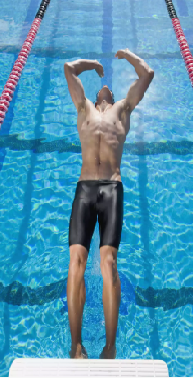
When starting out on the backstroke, it is very important to have an explosive leg drive as a strong leg drive will affect all other activities below. Make sure to extend your hips and knees and take the most powerful shot possible. Consider pushing by doing a squat jump, you want to drive through your hips and knees, not just one or the other.
Push with Levers for Quick Exit
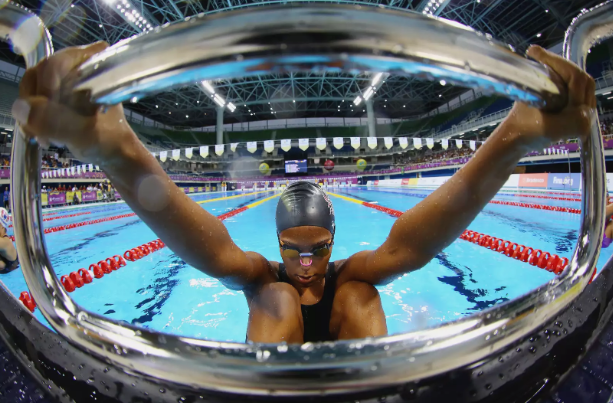
Many people forget that the arms have two points of contact to propel the body through the water. When you hear the starter beep, push as hard as you can with your arms, facilitating the explosion of the hips and legs from the first step.
Throw His Aggressive Head Back and Make a Clean Entry
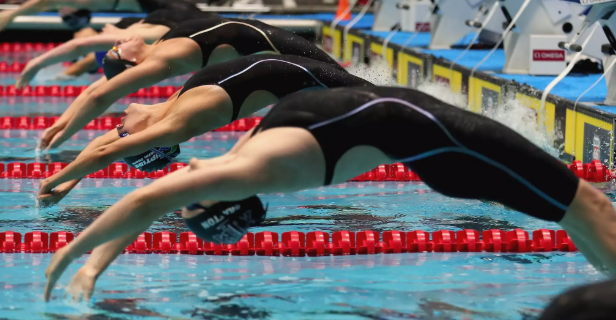
It may sound very simple, but the body follows the head. This is a saying I heard many times in physical therapy school, but it also applies to the backstroke beginner. As you leave the block, be sure to throw your head aggressively in the direction you want your body to move. Once you're on the block, throw your head back aggressively and grab the neck.
A clean entry reduces the surface drag of the entry and prevents drag that could slow the swimmer. The clean entrance is a combination of many factors: streamlined arms, arched back, high hips and pointed toes. As you engage your rear, you allow yourself to transfer the energy created from the strong start into your pitch stroke. Remember, the start is the fastest point of any swim race, don't lose that speed once you enter the water.
Powerful Underwater Dolphin Foot Kicks (dolphin kicks)
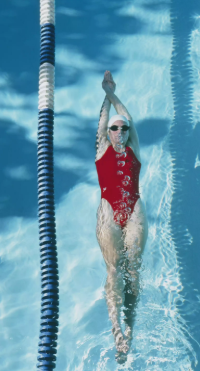
The fastest way to maintain speed from a clean entry is to use powerful pitching kicks. For these strokes, be sure to generate power from your core musculature, but remember that stroke tempo is very important. Try to find the balance of maximizing kick power with a fast kick tempo. Many try to generate power from the core, but move the entire body. That's not the goal, move powerfully down from the belly button and create fast, powerful strokes! In summary, Now, knowing the steps to perform a powerful backstroke launch is very different from executing a powerful backstroke launch. This makes getting into the pool and putting them into practice essential to skill acquisition. Remember, perfect practice creates perfect performance!
Yaş grubunuza ve yüzme seviyenize en uygun eğitim programını belirlemek için bizimle iletişime geçebilirsiniz.


